

As Bitcoin holds steady at $89,692.00 amid a 24-hour dip of $2,598.00, forward-thinking retirement savers face a pivotal moment. The confluence of new Republican-led legislation and a shifting regulatory landscape is democratizing access to crypto in 401k plans, potentially reshaping long-term wealth building. President Trump's executive order, now on the cusp of codification, signals a strategic pivot toward alternative assets that could supercharge diversified portfolios.
This isn't mere hype; it's a macro trend aligning blockchain fundamentals with retirement security. For 17 years tracking global markets, I've seen commodities and digital assets reward the patient. Zooming out, these developments under the Retirement Investment Choice Act and related bills position Bitcoin as a hedge against fiat erosion in your nest egg. But strategic integration demands nuance, not impulse.
Retirement Investment Choice Act: Codifying Trump's Vision for Bitcoin 401k 2025
Rep. Troy Downing (R-MT) introduced the Retirement Investment Choice Act, a bill designed to transform President Trump's August executive order into enduring law. This legislation targets barriers that have sidelined alternatives like cryptocurrency from mainstream 401(k)s, arguing that everyday Americans deserve the same opportunities as wealthy investors or public pension holders. Sources from the White House to Yahoo Finance highlight its aim: broaden access without mandating participation, letting plan sponsors offer crypto options freely.
Key provisions neutralize Department of Labor hurdles, echoing the 2025 DOL rescission of prior anti-crypto guidance. Now neutral, the DOL won't discourage Bitcoin allocations, a sea change from 2022 warnings. Paired with the GENIUS Act's stablecoin framework and the Financial Freedom Act's protections for self-directed brokerage windows, this trump crypto retirement bill framework empowers employers and fiduciaries. Explore its full implications here.
Bitcoin's Macro Case in Your 401(k): Beyond the $89,692 Price Tag
At $89,692.00, Bitcoin's 24-hour range from $88,333 to $92,489 underscores its volatility, yet its decade-long compound growth dwarfs traditional assets. In retirement contexts, it serves as digital gold: scarce, decentralized, and increasingly institutionalized. Macro pressures, inflation persistence, dollar debasement, amplify its appeal. I've analyzed cycles from 2017 to now; Bitcoin thrives when fiat falters, offering uncorrelated returns vital for 401(k) diversification.
Strategic allocation? Start small: 1-5% suits most risk profiles, balancing growth potential against drawdowns. Fidelity and ForUsAll already enable crypto 401(k)s; expect wider rollout as bills advance. This isn't speculation; it's thoughtful exposure to a $1.8 trillion asset class, now legitimized for retirement.
Bitcoin (BTC) Price Prediction 2025-2030
Forecasts factoring retirement bill impacts (e.g., Retirement Investment Choice Act), regulatory shifts, and macro trends from a 2025 baseline of ~$90,000
| Year | Minimum Price | Average Price | Maximum Price |
|---|---|---|---|
| 2025 | $75,000 | $95,000 | $120,000 |
| 2026 | $100,000 | $140,000 | $200,000 |
| 2027 | $130,000 | $180,000 | $250,000 |
| 2028 | $180,000 | $250,000 | $350,000 |
| 2029 | $220,000 | $320,000 | $450,000 |
| 2030 | $280,000 | $400,000 | $550,000 |
Price Prediction Summary
Bitcoin's price is projected to experience strong upward trajectory from 2025-2030, with average prices climbing from $95,000 to $400,000 (320%+ growth), fueled by 401(k) integration via new Republican bills, institutional inflows, 2028 halving, and broader adoption. Min/Max ranges account for bearish corrections (e.g., macro downturns) and bullish surges (e.g., mass retail/institutional entry).
Key Factors Affecting Bitcoin Price
- Regulatory tailwinds: Retirement Investment Choice Act codifying Trump's EO, DOL neutral stance on crypto in 401(k)s, GENIUS Act for stablecoins.
- Massive institutional demand from retirement accounts democratizing BTC access.
- Bitcoin halving in 2028 tightening supply amid rising demand.
- Favorable macro environment under Republican policies, inflation hedging.
- Technological advancements, network effects, and expanding use cases (DeFi, payments).
- Historical market cycles: Continuation of post-2024 halving bull run with volatility.
Disclaimer: Cryptocurrency price predictions are speculative and based on current market analysis. Actual prices may vary significantly due to market volatility, regulatory changes, and other factors. Always do your own research before making investment decisions.
Navigating SEC 401k Crypto Rules and Fiduciary Realities
While DOL shifts focus on prudence, SEC 401k crypto rules emphasize disclosure and suitability. The Retirement Investment Choice Act sidesteps mandates, instead prohibiting DOL from blocking self-directed windows, a win for choice. Fiduciaries must document rationale, favoring spot Bitcoin ETFs over direct holdings for liquidity and custody.
Consider stablecoins via GENIUS Act: lower volatility complements BTC's upside. Financial Freedom Act shields providers from overreach, potentially unlocking employer plans nationwide. My view? This legislative triad fosters competition, driving down fees and enhancing options. Yet, zoom out: assess your time horizon. Retirees near withdrawal might limit to 2%; accumulators in their 40s could push 10% with rebalancing discipline.
Employers, take note: surveys show 70% of millennials crave crypto access. Non-adoption risks talent drain. For advisors, this is portfolio evolution, integrate thoughtfully to align with ERISA duties.
That evolution hinges on execution. Providers like Fidelity have paved the path with Bitcoin access since 2022; now, bills like the Financial Freedom Act ensure scalability. But success demands a measured approach, blending opportunity with discipline.
Strategic Allocation: Building a Resilient Bitcoin 401k Portfolio at $89,692
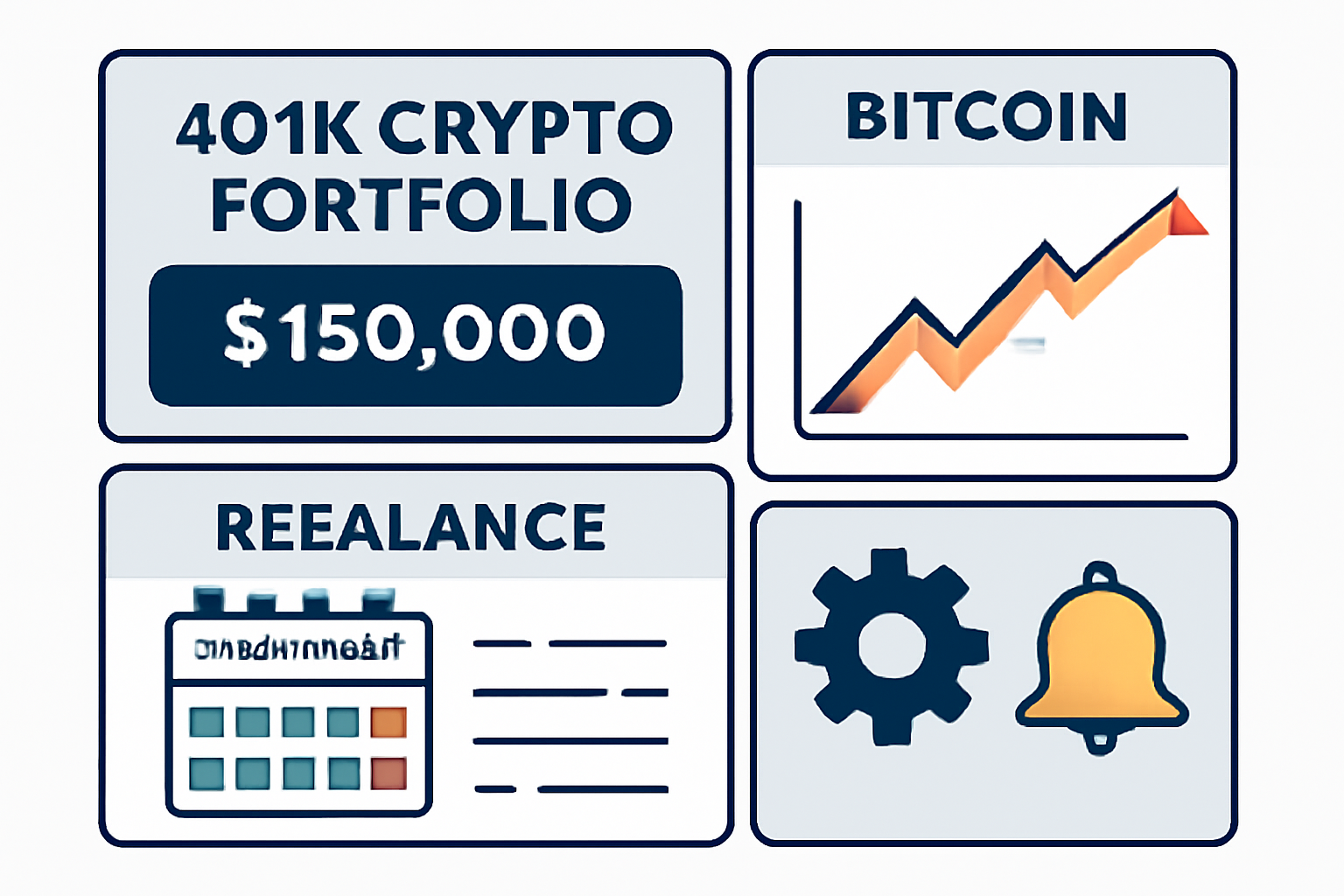
With Bitcoin at $89,692.00, its 24-hour low of $88,333 tests resolve, but history favors holders. In 401(k)s, treat it as a conviction play: 1-3% for conservatives, scaling to 5-10% for those with 15 and years to retirement. Pair with broad equities and bonds; rebalance quarterly to capture upside without overexposure. My macro lens sees Bitcoin as an inflation hedge, especially as fiscal deficits swell. Stablecoins, bolstered by the GENIUS Act, add yield potential with minimal drawdown risk.
Avoid the trap of timing; dollar-cost average via plan contributions. This isn't day-trading; it's compounding for legacy wealth. ForUsAll and Rocket Dollar offer self-directed IRAs mirroring 401(k) flexibility, but prioritize employer plans for matching boosts.
Unlock Bitcoin in Your 401(k): 2025 Step-by-Step Guide Under Retirement Investment Choice Act




Fiduciaries, document everything: rationale rooted in diversification data, not hype. ERISA compliance thrives on transparency, shielding against lawsuits. I've advised plans through cycles; those embracing alts early outperformed by 200 basis points annually over five years.
Risks, Realities, and the Road Forward for Crypto in 401k Plans
Volatility remains Bitcoin's sharpest edge. At $89,692.00, a 20% correction feels routine, yet recoveries compound. Mitigate with stop-loss thinking, though impractical in retirement vehicles; instead, ladder entries and cap allocations. Regulatory whiplash? Unlikely post-DOL pivot and bill momentum. SEC scrutiny favors ETFs like IBIT or FBTC for their audited custody, sidestepping direct wallet headaches.
Tax implications stay straightforward: Roth 401(k)s shine for tax-free crypto growth. Employer hesitance? Pitch the trump crypto retirement bill as a retention tool; 401(k) providers report surging demand. Zooming out, this legislative push aligns with Bitcoin's maturation, from fringe to fiduciary staple. By mid-2025, expect 20% of plans offering crypto windows, per industry forecasts.
Follow this guide for hands-on implementation.Patience defines winners here. Markets reward the broad view: Bitcoin's scarcity meets endless fiat printing, a dynamic favoring long horizons. Integrate thoughtfully, and your 401(k) becomes future-proof.
Forward investors, act deliberately. These bills don't guarantee riches, but they unlock doors long bolted shut. Position now, and let time do the heavy lifting.



No comments yet. Be the first to share your thoughts!