
Get crypto 401k 2026 right
The Department of Labor’s final rule on alternative assets, effective for plan years beginning after April 10, 2026, allows 401(k) plans to offer cryptocurrency investments. This change shifts crypto from a prohibited niche to a permissible, though complex, investment option. For employers, it introduces new fiduciary duties. For employees, it introduces significant risk and volatility. Understanding the mechanics, costs, and regulatory requirements is essential before making any decisions.
How crypto 401(k) options work in 2026
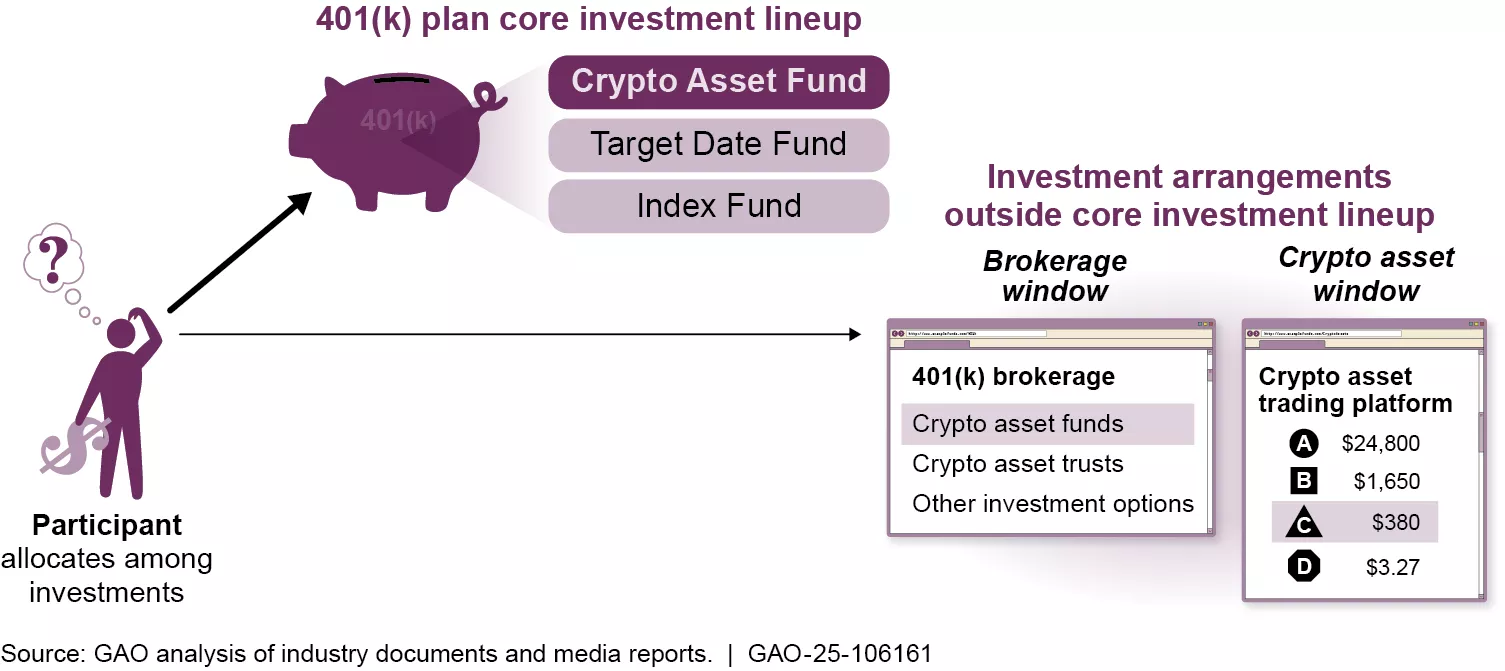
The new rule does not mandate that employers offer crypto. It removes the regulatory barrier that previously prevented it. Employers who choose to offer crypto must treat it like any other investment option: they must conduct due diligence, monitor the offering, and ensure fees are reasonable. The most common vehicle for this is a Self-Directed Brokerage Account (SDIRA) embedded within the 401(k) plan, or a specific crypto fund offered by the recordkeeper.
Fiduciary responsibilities for employers
Plan sponsors remain fiduciaries under ERISA. This means they must act solely in the interest of participants. Offering crypto requires a documented investment policy statement that explains why the option is suitable. Sponsors must verify that the crypto provider uses qualified custodians, has robust security protocols, and provides transparent pricing. Failure to do so can lead to personal liability for the sponsor if participants suffer losses.
Risks for employees
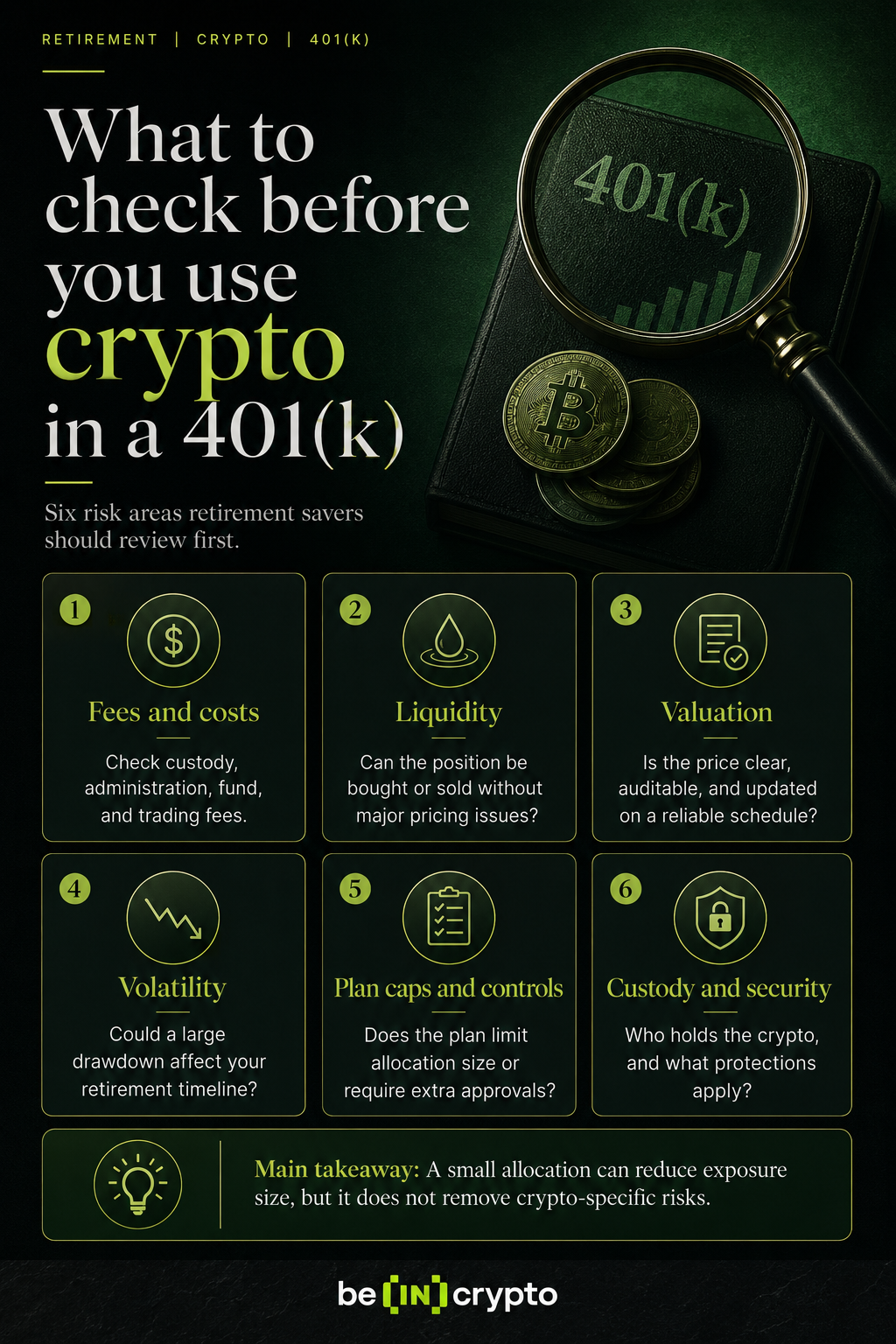
Cryptocurrency is highly volatile. Unlike stocks, which have underlying earnings and assets, crypto prices are driven by speculation, regulation, and market sentiment. The SEC has not approved a spot Bitcoin ETF for inclusion in most 401(k) plans as a direct holding, though some funds may hold them. Employees should consider:
- Volatility: Crypto can drop 50% or more in a short period.
- Liquidity: While Bitcoin is liquid, smaller altcoins may not be.
- Tax implications: Crypto gains are taxed as capital gains. Withdrawals from traditional 401(k)s are taxed as income.
- Custody risks: If the plan uses a third-party custodian, participants must trust that entity’s security.
Steps to evaluate crypto in your 401(k)

Common mistakes to avoid
Treating crypto like a stable asset
Many investors assume crypto will behave like tech stocks. It does not. Crypto markets operate 24/7 and are influenced by regulatory news, hacking incidents, and macroeconomic factors unrelated to corporate earnings. Do not allocate more than you can afford to lose.
Ignoring fiduciary compliance
Employers who offer crypto without proper due diligence risk ERISA violations. This includes failing to monitor the crypto provider’s security or not disclosing risks to participants. Always document your decision-making process.
Overlooking tax consequences
Crypto transactions within a 401(k) are tax-deferred (or tax-free in a Roth 401(k)). However, if you withdraw crypto or convert it to cash, you may face taxes. Consult a tax advisor to understand the impact on your retirement strategy.
No comments yet. Be the first to share your thoughts!