
Get crypto 401k 2026 right
Before you make your first move, you need to verify that your current plan actually allows it. Most traditional 401(k) plans do not include cryptocurrency options. You must confirm your employer has adopted a self-directed brokerage window or a specific crypto-friendly provider.
Next, check your contribution limits. For 2026, eligible participants can contribute up to $72,000 annually, or up to $80,000 for those aged 50 and older. Understand how much of that limit is available for reallocation into crypto assets without triggering over-contribution penalties.
Finally, review the tax implications. Effective January 1, 2026, brokers are required to report cost basis for crypto purchased on or after that date on the 1099-DA form. This changes how you report gains and losses. Ensure you understand these reporting requirements before trading.
How to add Bitcoin and Ethereum to your 401(k)
Adding cryptocurrency to your 401(k) is no longer theoretical, but it requires navigating a specific set of employer and plan rules. The process involves finding a self-directed plan, verifying asset availability, and understanding the tax implications that begin in 2026.
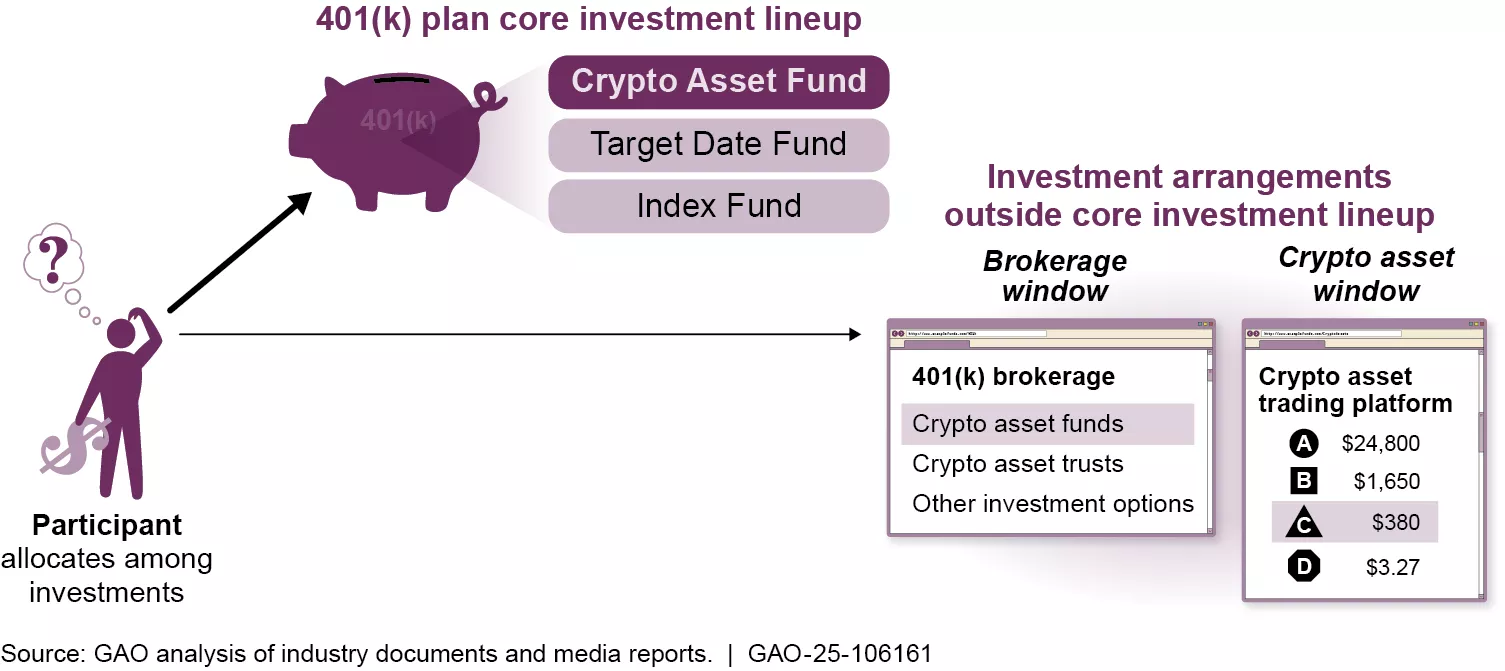
Start by checking if your current employer offers a self-directed 401(k) or solo 401(k). Most traditional corporate plans do not include crypto options. If your employer is resistant or the plan is standard, you may need to open a solo 401(k) if you are self-employed or a business owner with no employees other than a spouse. For 2026, solo 401(k) contribution limits allow eligible participants to contribute up to $72,000 annually, or $80,000 if you are age 50 or older. Source: IRA Financial

Not all self-directed plans support Bitcoin or Ethereum. You must review your plan’s prospectus or speak with the administrator to confirm which digital assets are permitted. While Bitcoin is widely accepted, Ethereum availability varies. Ensure the platform you choose is IRS-compliant and offers the specific coins you intend to buy.

Once your plan is set up and verified, you must fund it before making investments. For a solo 401(k), contributions are made through payroll deductions or business owner profit-sharing. For a self-directed traditional 401(k), ensure your employer allows after-tax or Roth contributions if you wish to buy crypto with post-tax dollars, as pre-tax dollars are typically restricted to traditional assets by many plan administrators.

You cannot buy crypto directly from your 401(k) balance using a personal exchange like Coinbase. You must use the designated custodian or trading platform provided by your plan. These custodians handle the secure storage and compliance reporting of your digital assets. Execute the trade for Bitcoin or Ethereum through this approved interface.

Starting January 1, 2026, new IRS rules require brokers to report the cost basis for crypto transactions on Form 1099-DA. This means your 401(k) custodian will provide clear records of your entry price, simplifying tax filing. Ensure your custodian is compliant with these new reporting standards to avoid discrepancies during tax season.
Fix common mistakes
Adding Bitcoin and Ethereum to a 401(k) sounds simple, but the process is fraught with pitfalls that can trigger unexpected taxes or fees. The most frequent error is assuming every employer plan accepts cryptocurrency. Fidelity was the first major firm to offer this option in 2022, but availability still depends entirely on your employer’s specific plan design. If your company hasn’t adopted a self-directed brokerage window or a specialized crypto provider, you cannot add these assets directly to your traditional 401(k).
Another critical mistake involves the tax implications of self-directed accounts. While a standard 401(k) offers tax-deferred growth, moving to a self-directed structure often requires a Solo 401(k) or a Roth 401(k) conversion. If you convert traditional funds to a Roth to buy crypto, you must pay income tax on the converted amount immediately. Many investors overlook this liquidity requirement, forcing them to dip into other savings to cover the tax bill.
Finally, watch for custodian restrictions and fees. Not all self-directed custodians allow crypto holdings, and those that do often charge high annual maintenance fees or per-transaction costs. These fees can erode your returns significantly over time. Before proceeding, verify that your chosen provider supports the specific blockchain assets you want and calculate whether the potential upside outweighs the administrative costs.
Crypto in 401k 2026: what to check next
Retirement accounts are built for steady growth, not speculation. Adding Bitcoin or Ethereum introduces volatility that can shake long-term compounding. Before you open a self-directed plan, clear up the basics on availability, taxes, and timing.
These answers cut through the noise. The goal is to protect your nest egg while still allowing for calculated risks. Check your plan’s specific rules before making any moves.
No comments yet. Be the first to share your thoughts!